

Skip to content
Banner

Who Comes Next and How

Webinars

Continuing Education Credit Offered For Live Session Only: Generic, SHRM

Webinar Details

Succession planning is easy to treat as a textbook exercise, until it is your own seat being planned. This session skips the framework lecture and instead follows two real companies, a life sciences consultancy that leaned toward an external search and a utility-services firm that promoted from within, as they move through the same three phases of a leadership transition: getting started, getting ready, and getting real. Along the way we will consider the tools they used and how, including the CEO scorecard and the ""essence of the role,"" and watch how the same decision framework can responsibly lead two companies to opposite answers. You will leave able to locate your own situation, name the tools that fit it, and take a few concrete steps in succession planning for your organization.


Learning Objectives

1. Locate their own situation within the three succession scenarios (emergency, departure-determined, and strategic leadership development) and recognize how ongoing leadership development decides whether a future transition becomes a crisis or a non-event.


2. Apply core role-definition tools, including the scorecard, desired outcomes, and essence of the role, to clarify what a specific leadership seat actually requires before evaluating any candidate.


3. Weigh internal versus external candidates using a shared pros-and-cons framework and anticipate the practical and human realities of an actual handoff, from transition runway to the board's role and the outgoing leader's changing position.

Webinar Slides
Webinar Replay

Get Event Updates in Your Inbox

Presenters

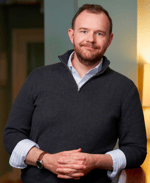
Tom Bonner headshot Presenter company logo

Tom Bonner

Tom Bonner is a Senior Consultant at Praxis. With over a decade of experience in management and organizational development, he has worked alongside leaders and teams across privately held businesses, nonprofits, and higher education institutions — including years of deep engagement with family business owners that shaped his thinking on ownership, culture, and shared accountability. He believes that ownership fundamentally transforms how people lead, how they show up, and how they envision the future, and he brings that conviction to his work helping organizations build the structures, conversations, and alignment that make employee ownership meaningful in practice.

Grounded in a background in the arts, he has a particular interest in the stories people tell about their roles and how competing narratives can quietly undermine progress — and a proven strength in facilitating the complex, high-stakes conversations that move organizations forward. He holds a Master's degree in Arts Management from Drexel University and a Bachelor of Arts in Directing from Marymount Manhattan College, and is certified in Negotiation and Mediation, Executive Leadership, and the Predictive Index.


Thank you to our Sponsors

Blue Ridge
Chartwell
KSM
McDermott Will & Schulte LLP
PCE Investment Bankers, Inc.
Prairie
Praxis
Strategic Talent Partners