
EOT Toolkit
For Business Owners



Article
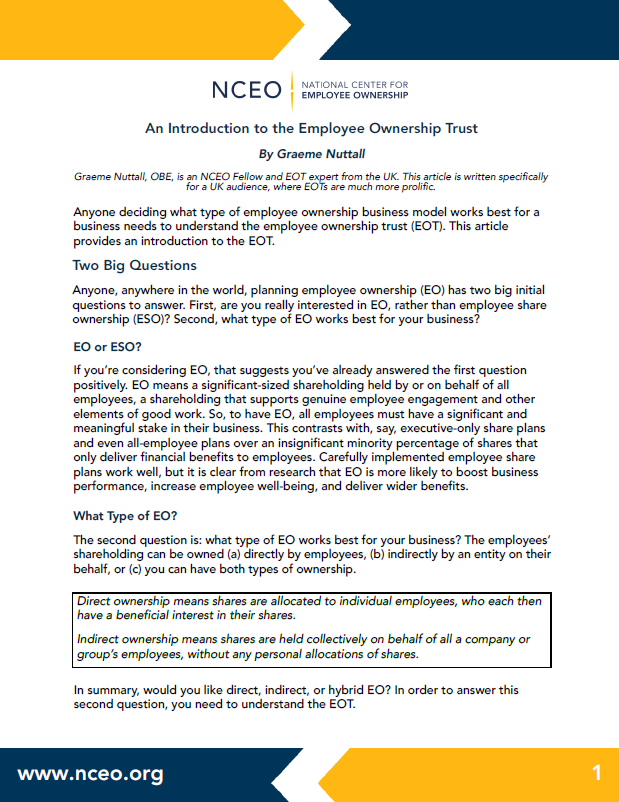
An Introduction to Employee Ownership Trusts
This is the foundational reading material for owners, defining the EOT model, outlining the key motivators (e.g., preserving legacy), and detailing the crucial distinction from ESOPs.
The Global EOT Landscape Trends, Growth, and Lessons for the US Handout
Explore the history, global momentum, and structural success of EOTs in other countries to understand the US movement’s trajectory and potential.
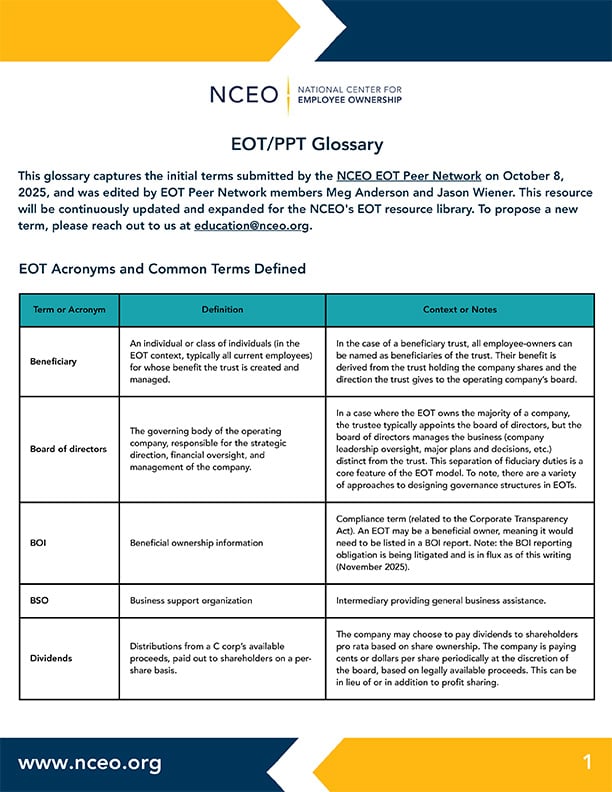
EOT Acronyms and Common Terms Defined
Use this concise glossary to master the essential terminology, trust structures, acronyms, and legal language required for discussing EOTs.
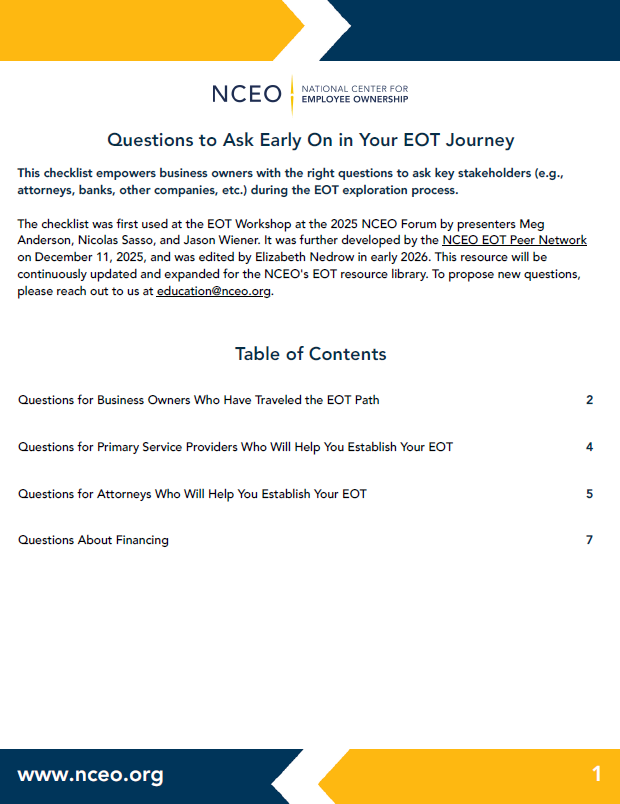
Questions to Ask Early On in Your EOT Journey
This checklist provides critical prompts for owners to empower them with the right questions to ask key stakeholders (e.g., attorneys, banks, other companies, etc.) during the EOT exploration process.
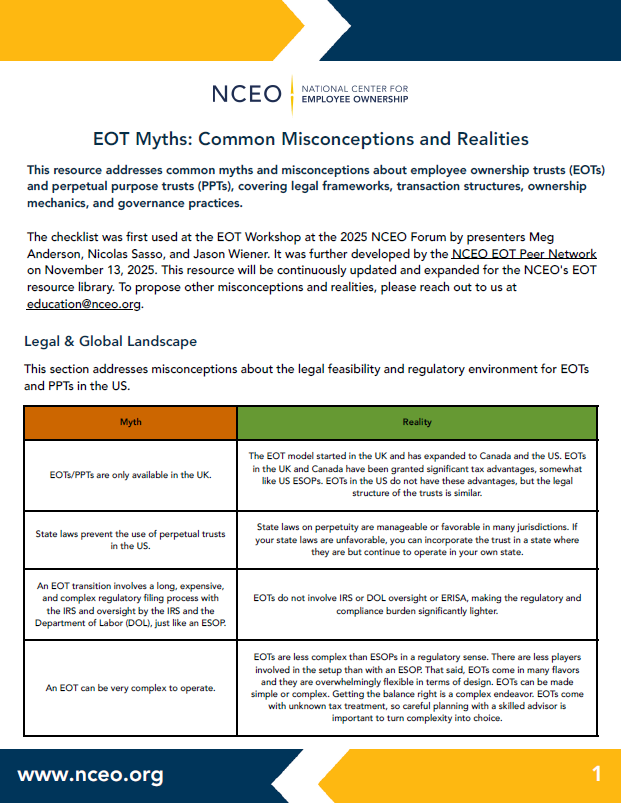
Debunking Common EOT/PPT Myths
Address the most frequent misconceptions and challenges surrounding EOTs to ensure your decision making is based on accurate facts.


Networking
EOT Peer Network
Attend and engage in monthly meetings with real companies in a confidential and intimate virtual setting that fosters connection, learning, and growth.